Safari Lodge Selection: Why Camp Style Matters
Tented camp, permanent lodge, contemporary architecture, classic colonial — each style suits a different traveller. The difference is real.
Choosing the right safari lodge matters more than choosing the right region. A great lodge in a less famous reserve produces a better safari than an average lodge in the Masai Mara. The question of camp style — tented or permanent, traditional or contemporary, intimate or larger — shapes the trip more than guests usually expect.
Tented camp versus permanent lodge.
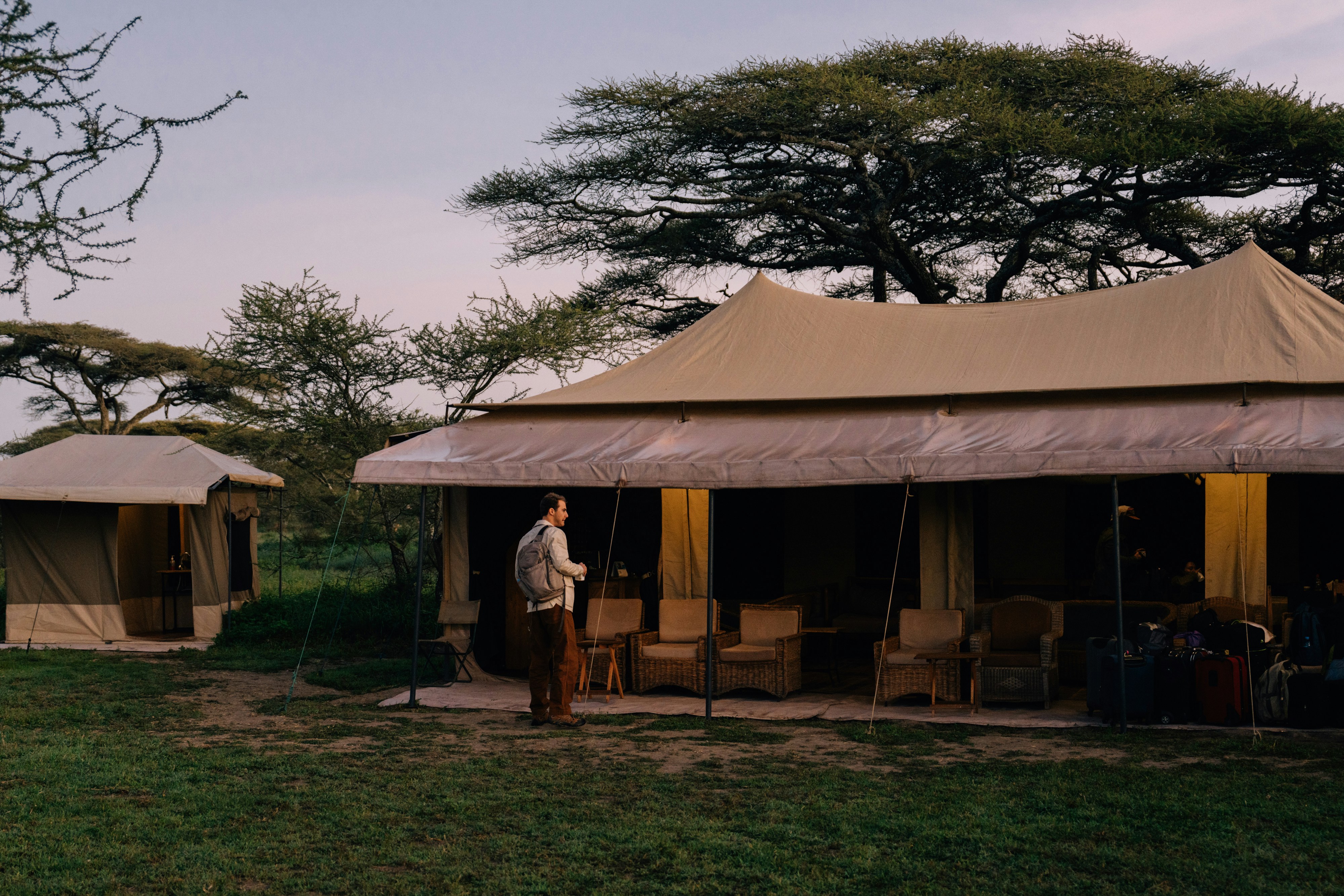
Modern luxury tented camps — Cottar's 1920s Camp, Mahali Mzuri, Sasaab — are emphatically not the canvas-tent camping of twenty years ago. They have proper bathrooms, four-poster beds, full-service dining. The "tent" structure means a closer connection to the bush — the sounds at night, the open-air shower, the canvas walls that let in early-morning light. For travellers who want the sense of being in the wilderness, this matters.
Permanent lodges — Singita Sabora, Royal Malewane, Sanctuary Olonana — are more solid construction with stronger insulation, larger common areas, and a slightly different rhythm. Cooler at night, more separated from the bush ambient sounds. For travellers who want luxury that feels closer to a hotel, the permanent lodge is the right answer.
Number of rooms.
Smaller camps (six to ten rooms) produce a different social dynamic. Meals are often communal. Guides interact more across vehicles. Larger camps (sixteen to twenty rooms) have more dining options, more staff diversity, and the option to be invisible at meals. Both work; they suit different travellers.
Contemporary versus traditional design.
Singita Sabora and Bisate Lodge in Rwanda lean contemporary. Cottar's 1920s Camp and the classic Sanctuary lodges lean traditional safari aesthetic — colonial-era references, antique furniture, the look that earlier generations of safari travellers associate with the experience. Neither is better. The decision is about which atmosphere the client wants.
The guide question.
The single most important variable in a safari is the guide, not the camp. We will sometimes recommend a less-known camp with an exceptional head guide over a more famous camp with average guiding. The guide can extend a sighting by an hour, find the predator others have missed, and create the moment that defines the trip.
Our usual approach.
For first-time safari travellers, we lean toward camps with eight to twelve rooms, strong guides, and a position that allows real wilderness access. Singita, andBeyond, and Wilderness's portfolios all deliver this consistently. For return safari travellers, we get more specific — particular camps for particular kinds of trips, sometimes combining a famous camp with a quieter property in the same itinerary.
Let us help you think through it.
We work through these conversations carefully, one journey at a time.
Start Planning