Arctic vs Antarctica
Both are extraordinary, but they are not interchangeable. The Arctic is human-touched, summer-bright and wildlife-rich. Antarctica is empty, vast and humbling.
Arctic and Antarctic expeditions are often discussed together as the "polar regions," but they are very different journeys. The wildlife, the landscapes, the human presence and the trip rhythms are genuinely distinct. The choice between them depends on what kind of polar experience the client wants.
The fundamental geography.
Antarctica is a continent surrounded by ocean. The Arctic is an ocean surrounded by continents. This single difference shapes everything — wildlife distribution, accessibility, the type of vessel needed, the seasonal patterns.
Wildlife emphasis.
Antarctica's signature wildlife is penguins (multiple species), seals, and whales. The wildlife is concentrated and easy to observe at landings — penguin colonies are large, visible, and active during the daylight hours. The Arctic offers polar bears, walrus, beluga and narwhal, Arctic foxes and reindeer. Polar bear viewing requires patience and is genuinely uncertain on any given day. The Arctic wildlife experience tends to be more episodic — moments of intensity separated by long observation periods.
Human history.
Antarctica has minimal human presence — research stations and the remnants of historical expeditions. The Arctic has thousands of years of human presence: Inuit communities, whaling history, the Northwest Passage exploration, sites of historical significance. Trips to Greenland, Svalbard, the Northwest Passage and the Russian Arctic engage with this history. For travellers interested in human as well as natural history, the Arctic offers more depth.
Landscape character.
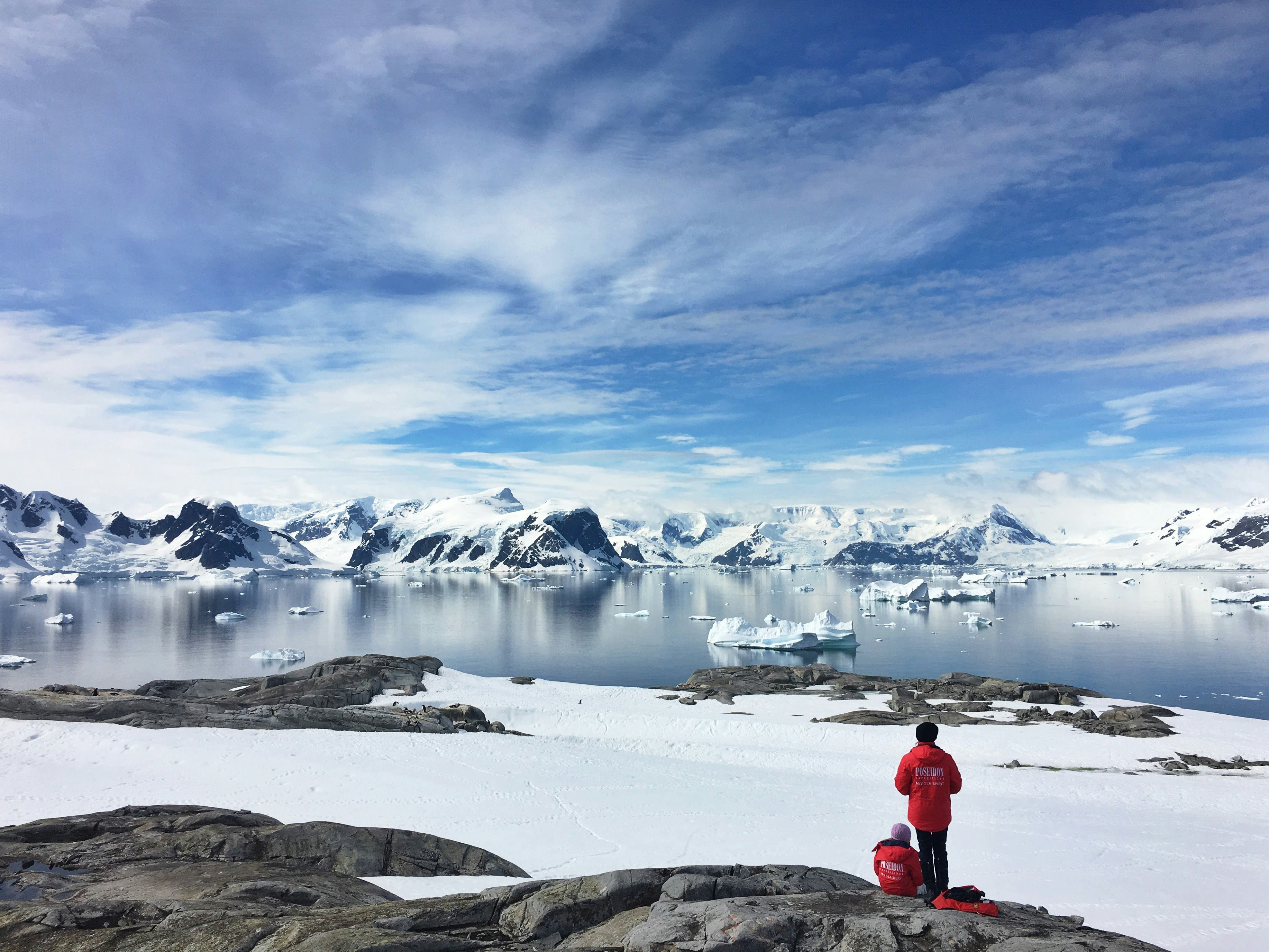
Antarctica is empty, dramatic, scaled — landscapes that are about the absence of human presence. Iceberg architecture, vast white plains, peaks rising from ice. The Arctic has more variety — granite peaks of Svalbard, the icebergs of Disko Bay in Greenland, the tundra and the Northern Lights at lower latitudes during shoulder seasons.
Accessibility.
The Antarctic season is shorter and more concentrated (November to March). The Arctic offers longer seasons — Greenland and Svalbard from May to September, with Northern Lights viewing from October through March at lower-latitude Arctic locations.
Comfort.
Antarctic expedition ships now offer hotel-level cabins and dining. Arctic vessels vary more — some operate at the same level, others are more traditional expedition vessels with smaller cabins. For travellers prioritising comfort, the Antarctic luxury vessels (Ponant, Silversea, Scenic, Crystal) are currently the most refined polar expedition products available.
Our usual advice.
For first polar expeditions, Antarctica often makes more sense — the wildlife is more reliable, the landscapes are more iconic, the operating culture is more developed. For travellers who have been to Antarctica and want a different polar experience, the Arctic — particularly Greenland or the Northwest Passage — opens an entirely different dimension. Both belong on the right traveller's life list. Most clients do one before considering the other.
Let us help you think through it.
We work through these conversations carefully, one journey at a time.
Start Planning